
No products in the cart.
Return To ShopSouth Korea’s “No Sex, Only Money” Youth Trend

China OEM adult toy manufacturer
China custom sex toy manufacturer
China realistic dildo manufacturer
China adult toy supplier for brand
0.918, 0.837, 0.808, 0.778…
Don’t worry, it’s not stocks, it’s South Korea’s birth rate.
In 2023, South Korea’s fertility rate was only 0.73, marking the sixth consecutive year of decline since it fell below 1 in 2018.
The fertility rate is the ratio of the number of births in a year to the number of women of childbearing age.
In 2021, the global fertility rate was 2.3, meaning that a woman gives birth to 2.3 children in her lifetime.
South Korea’s 0.73 means that a significant proportion of women choose not to have children.
This fertility rate is not only the lowest in South Korea since relevant statistics began in 1970, but also the lowest in the world.
The butterfly effect is even more terrifying: nearly a quarter of primary schools have fewer than 60 students; 42% of families have only one person; the number of unmarried people and elderly people living alone continues to increase; a large number of kindergartens and primary schools are closing down, and in a few years, a large number of secondary schools will also close down…
“Long Time No See” is a Korean drama born against this backdrop. It has a high rating of 8.6 on Douban and has dominated the trending topics for a week.
“Long time no seE” (long time no see) is a common greeting, but in South Korea, it has become “long time no seX” (long time no see).
The pun, a stroke of genius, illuminates countless familiar realities.
The reason why South Korea’s birth rate is low today is not simply due to people not getting married or having children.
It’s not that young people no longer have sex.
Tired, exhausted, should I just give up?
In the still of the night, in the stairwell, young men and women, like dry wood meeting a raging fire.
Yuzhen took off her stockings, took the pants that Samuel had just taken off, and went into the house. The sour smell of hormones overflowed the screen.
At first glance, it might seem like a romantic comedy about a couple rekindling their romance and accidentally firing a gun.
What may seem like a pornographic film at first glance often turns into a documentary a few years later.
Seven years later, their relationship was as follows: he made kimchi, she paid the bills; they were in the same room, but didn’t exchange a single word; their mutual respect in daily life extended to their sex life—they each used separate blankets; their sexual needs? They resolved them separately in the bathroom and living room…
To enhance their sexual experience, the two talked about each other’s strengths in a love hotel with a great atmosphere.
But the advantages are as follows: the wife thinks her husband’s fingers are thick and very useful.
The husband thinks his wife is very loyal, has great leadership qualities, and is born to be a general…
Don’t love me anymore? Not really.
The two lived frugally, and Yuzhen always enjoyed the kimchi that Samul made; when Yuzhen raised her hand and stretched her leg, Samul knew what she meant, showing remarkable understanding.
It’s not “incapable of love,” nor “incapable of sex,” but rather “incapable of doing.”
To put it simply, the reason is: no money.
Yu-jin works as a receptionist at a hotel, often working night shifts for very little pay; Sam, a graduate of Seoul National University, failed in his business venture and had to become a taxi driver, only to have his taxi flooded and become unusable.
While a low salary might be manageable, there are many expenses when it comes to money.
As the youngest son in the family, Samuel had been the sole recipient of his parents’ affection for many years. On his father’s 70th birthday, he not only couldn’t afford a grand birthday banquet, but he also couldn’t come up with a decent gift.
The worst part is that the house the couple had worked so hard to save up for was affected by the “poor economic situation in South Korea”.
The house’s value has decreased by 150 million won, but the loan amount remains the same.
With reality in such a mess, who has the mood for sex, and who can afford to make love?
Generally speaking, those who can have regular sexual activity are from the propertied class.
The male and female protagonists, one a taxi driver and the other a hotel receptionist, are forced to delve into these provocative scenes every day due to their professions.
Some passengers went to great lengths to travel across cities to nightclubs and even paid high prices to have Samuel wait outside for several tens of minutes.
When Yuzhen works the night shift, she still encounters older people who manage to squeeze in a short-term rental for a quick visit; even if their mouths are dislocated from the massage, they’ll insist on having it done again next time…
Samuel’s classmate, who failed in his business venture, rose rapidly in rank and started driving a Porsche after marrying a rich girl.
But he still “made the mistake that all men make,” and had an affair.
However, in the eyes of the mistress who drives the Bentley, he is the plaything.
Yuzhen and the rich girl are still friends, so now that she knows about this, she can’t just let it go.
To avoid being exposed, Samul’s classmate gave Woojin’s family 30 million won as “hush money,” which gave Woojin and Samul a “path to wealth.”
Hmm, why is the plot not developing as I expected?
The 30 million won gave the two a business opportunity, and they decided to make money using other people’s sex lives.
Making money is better than sex.
Samuel, a taxi driver, has the travel records, while Yuzhen, the receptionist, has the hotel booking information. One of them follows and sneaks in by car, while the other monitors the target.
Let’s become paparazzi together, find addresses, locate locations, stake out and secretly take photos, and mail “evidence”.
He buried himself in practicing disguise techniques, becoming an actor from head to toe, racking his brains and exerting tremendous effort.
In order to successfully take photos secretly, one has to spend money on meals and tea to get into the atmosphere. Sometimes, one is even stopped by the police. In the end, because the other party works in the procuratorate, one has to abandon the plan, and all the preparations go down the drain.
In order to successfully extort money, the two destitute individuals had to brave dangers such as falling into the water in the dead of winter, being brutally beaten by a boxer, and getting into a car accident during a break from filming.
Yuzhen said, “Only a madman can earn money.”
For people in her social class, making money is more likely to bring them to climax than sex.
In fact, in capitalist societies, having an affair also involves considering the cost-effectiveness.
An elderly couple who came to attend the funeral booked a room at a hotel by the hour during a break in the funeral. Because they didn’t have enough cash, they borrowed 30,000 yuan from Yuzhen.
A scumbag bank loan officer cheated on his wife with a female colleague while she was pregnant, telling her they would “love each other forever.”
One way to express love is to make the most of a one-hour lunch break: eat a hamburger while quickly finishing in the car.
The fact that it ended almost before it even began drew sarcastic remarks from Yuzhen:
“How do they manage to eat a meal and have sex in 20 minutes?”
Did you know that the average male orgasm only lasts 7 minutes?
“Ha, all this trouble for just 7 minutes?”
This isn’t good value for money.
The trouble didn’t end there. When he was blackmailed for 15 million yuan and couldn’t raise the money, he turned to his girlfriend for help. When she said she couldn’t borrow any more, she suggested he take out a loan. But when he saw his own bank, he shook his head frantically: “How can I take out a loan here?!”
After all, the loan interest rates here can reach as high as 24%, and they are completely legal.
In reality, South Korean housing prices, which had been rising steadily, plummeted in 2021.
In Seoul and Gyeonggi Province, where the population density is highest, housing prices have plummeted by as much as 30%. The sharp decline in property value has left many working-class people who bought at high prices in dire straits.
Due to high loan interest rates, South Korea is one of the countries with the highest household debt levels in the world: the average debt per person is 300,000.
In recent years, news of young South Koreans committing suicide due to financial collapse has become increasingly common.
According to data released by Statistics Korea at the end of September 2022, an average of 36.6 people die by suicide every day in South Korea, or one person commits suicide every 40 minutes.
For ordinary working people, legitimate desires are hard to satisfy, so infidelity becomes another way to seek excitement and release sexual tension.
Unable to engage in “normal love,” they crave “improper love” even more.
Behind the consumed desire lies a hopeless South Korean caught in the turbine of a perpetual money-making machine.

Not rolling it will kill you, rolling it will drive you crazy.
It’s not hard to see that Korean dramas, which used to frequently gain popularity with their romantic love stories, now always manage to shock people with their cold realism.
For South Korea, the gamble of life is decided at the moment of reincarnation.
Their most famous theory is the “spoon class theory,” which clearly defines social hierarchy.
People born with a silver spoon in their mouth have a family fortune of over 2 billion Korean won and an annual family income of over 200 million Korean won (a net worth of tens of millions and an annual income of over one million).
This type of family accounts for only 1% of South Korea’s 50 million population.
The “Silver Spoon” has a family fortune of 1 billion won and an annual income of 80 million won (assets of 5 million won and annual income of 500,000 RMB), accounting for 3%.
The “copper spoon” family has assets of 500 million won and an annual income of 55 million won (assets of 3 million won and annual income of 300,000 won), accounting for about 10%.
And even smaller “plastic spoons” make up more than 80% of the South Korean population.
This social landscape is strikingly similar to that depicted in the movie “Parasite.”
In “It’s Been a Long Time Since I’ve Done It,” Yu-zhen’s talented daughter wins first place in piano competitions every time, and her piano teacher kindly suggests that she take her daughter abroad to study.
But she couldn’t even afford to rent clothes for the competition, and she became poorer and poorer with each competition.
Then came a complete breakdown: “I should have used contraception!”
On the other hand, Samuel’s wealthy friend’s daughter can use her parents’ allowance to practice stock trading and earn at least 1 million won a month, easily covering Samuel’s mortgage.
With the narrowing of upward mobility pathways, the starting point of the “spoon law” almost determines the end point of one’s life.
Behind the “spoon class theory” lies the closed-loop logic of social stratification in South Korea.
For a South Korean, the three things they cannot avoid in their lifetime are death, paying taxes, and Samsung.
The goal of either working for a big company and making big money or passing the civil service exam and getting a stable job is set high in the minds of South Korean students from a young age.
Despite having a population of only 52 million, South Korea has over 100,000 tutoring institutions.
The wise saying “Four times when you should be on the right track, five times when you should fall” is engraved in the hearts of every young person.
Sleeping four hours a day will get you into college, but sleeping five hours will definitely get you rejected.
Who dares to lie low in an era where everyone is vying for power?
Moreover, those who qualify for being “tiger parents” and engaging in fierce competition must at least be from a class with a certain amount of family wealth.
In the documentary “The Betrayal of Learning,” parents of three children stated that the tuition fee for each child averaged 10 million won (60,000 RMB).
Even if you are lucky enough to get into university, you should be prepared to apply for a loan and work to repay it.
Nearly 200 four-year universities charge 6.5 million won (40,000 RMB) in registration fees alone each year.
In 2019, more than 460,000 students in South Korea applied for student loans, while the total amount of government-subsidized scholarships for universities was the lowest in nearly five years.
Even so, registration fees continue to soar; in 2023, the average annual tuition fee in South Korea reached 6.7952 million won.
If you can’t get a job at a big company after graduation, you can choose to take the civil service exam, but taking the civil service exam also has costs.
Staying at the famous Noryangjin Goshiwon in Seoul is a good option. With the money saved on rent, you can maximize your potential by studying in a cramped room with a bed that’s less than an adult’s arm span wide.
After all, there were over 200,000 applicants, but only over 4,000 positions available.
The success rate is only 2.4%, which is lower than that of Harvard University.
There is a very famous narration in Animal World.
“When the environment is no longer suitable for survival, animals will first stop reproducing, and then they will migrate in large numbers.”
“I Hate Korea,” the opening film of the Busan International Film Festival a couple of years ago, features a female protagonist who abandons everything to immigrate to Australia alone, hoping to find her own happiness.
Her condition profoundly reflects a common mentality among South Koreans today: “Either thrive or die.”
According to a poll by South Korea’s Dong-A Ilbo, as many as 70% of adult men and women hope to emigrate overseas.
More than half of the respondents cited escaping the intense competition in South Korea as the reason, while a quarter cited dissatisfaction and disappointment with government corruption.
Even if South Koreans could find partners and get married as easily as in a science fiction movie, the cost of raising children could be so high that it would greatly reduce their libido.
According to data from Statistics Korea, the number of newborns in South Korea in the first 11 months of 2023 was 213,572, a decrease of 8.1% compared to the same period of the previous year. It is estimated that there will be 230,000 newborns for the whole year. Just eight years ago, this number was 438,400.
The Bank of Korea has released a forecast that if the birth rate cannot be effectively boosted, the South Korean economy will fall into negative growth by 2050.
The South Korean government has implemented policies; Incheon, a city with the lowest birth rate, even announced a reward of 100 million won (approximately 540,000 yuan) for each child born.
But as Professor Hwang Fei, the head of the Seoul Graduate School of Science, said: “Having a child is not something that can be solved with a one-time bonus. People are actually more afraid of the cost of raising a child than of giving birth.”
Time is running out for South Korea.










Product on sale
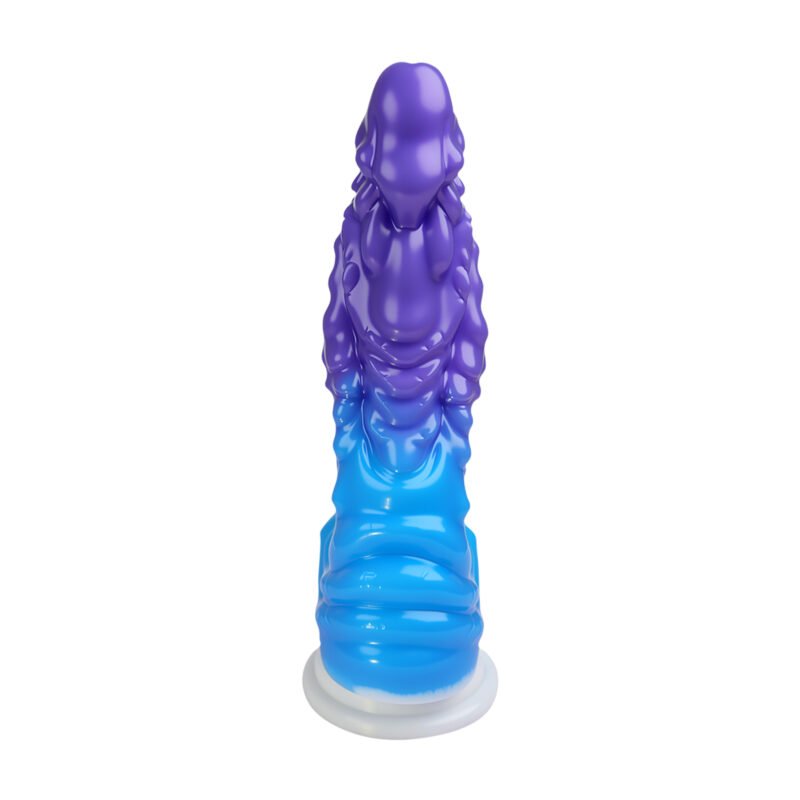
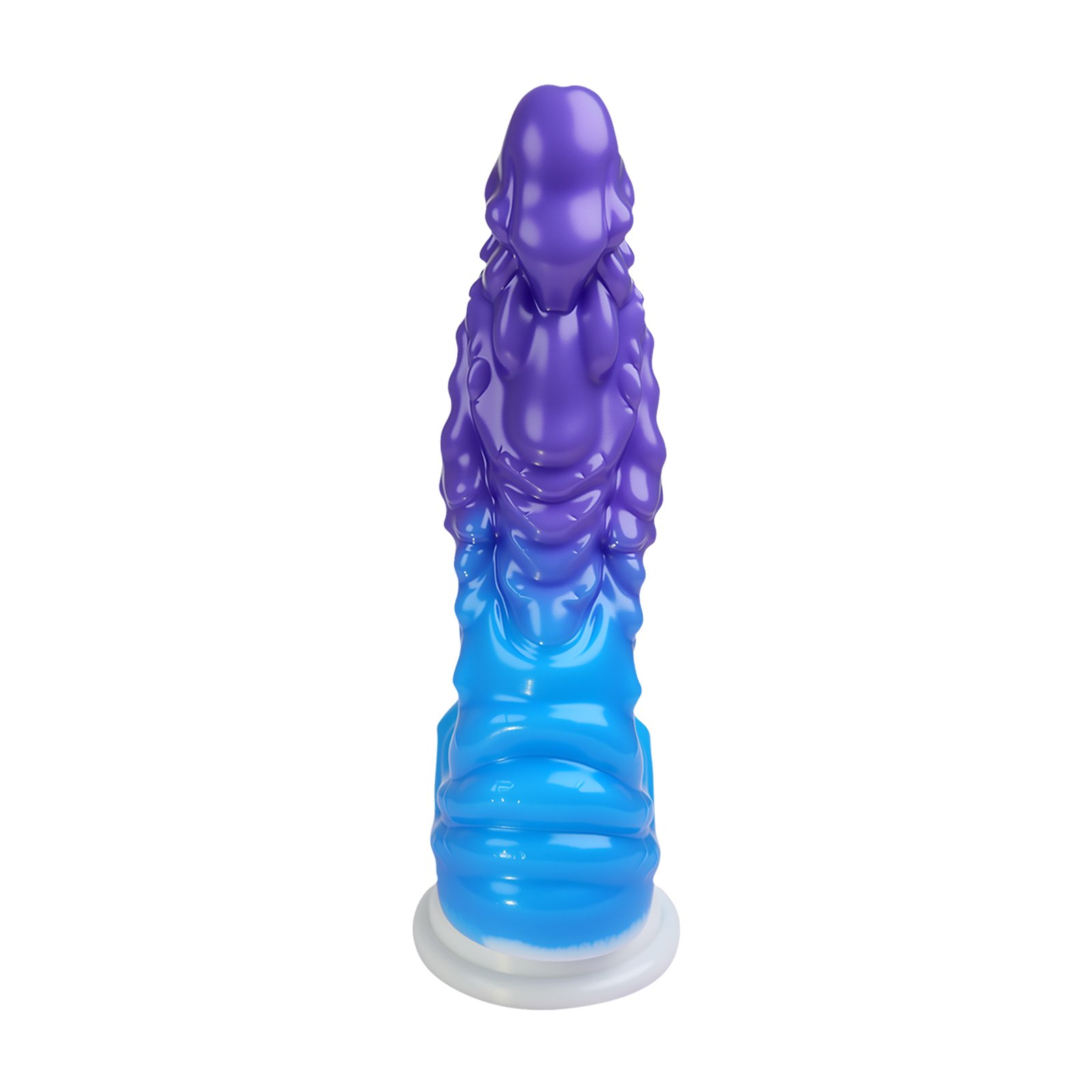
CLIMAGOHI Sculptural Dual-Layer Silicone Massager ZY-SC11044
Original price was: $52.00.$32.80Current price is: $32.80.
[SULTRYCARE] Sculptural Dual-Layer Silicone Internal Trainer – Integrated Suction Base – 5.9 in Insertable – Flexible & Textured Design – Mixed Color ZY-SC11044

About author


Add comment