
No products in the cart.
Return To ShopThe real private lives of women in ancient times

China OEM adult toy manufacturer
China custom sex toy manufacturer
China realistic dildo manufacturer
China adult toy supplier for brand
In ancient times, clothing was divided into two parts: the upper body was called “yi” and the lower body was called “chang.” “Chang” was somewhat like a skirt, essentially a piece of cloth to cover one’s modesty. Trousers didn’t appear until the Spring and Autumn Period. Later, women would wear an extra pair of old trousers underneath their menstrual garments to avoid soiling their outer trousers. Gradually, men followed suit, and this evolved into the underwear we wear today. Now, not wearing underwear has become another form of expression of sexiness.
How often did people in ancient times usually bathe?
What did they use to wash their hair? The ancients were much more hygienic than we imagine. As early as the pre-Qin period, people washed their hair every three days and bathed every five days. In the Han Dynasty, the concept of “rest and bath” emerged, meaning that officials could take a day off specifically to bathe after working five days.
Did women in ancient times shave their body hair?
Compared to their modern and highly intelligent lifestyles, Chinese women haven’t evolved much in terms of body hair removal. In fact, long ago, ancient women favored shaving off their eyebrows and then drawing them on with black pigment… Yes, the women in Akira Kurosawa’s film “Ran” who liked to make their eyebrows into tiny dots were following in the footsteps of their Chinese ancestors… In addition, ancient women also practiced “face threading,” which involved removing fine facial hair with thread… It’s often said that only men care about their appearance, but it seems that’s not the case.
Did lesbians exist in ancient times?
In ancient China, lesbian relationships were often referred to as “mirror grinding,” where both partners achieved sexual satisfaction through mutual rubbing or caressing of each other’s bodies. Because both partners shared a similar physical structure, it was as if a mirror was placed between them, hence the term “mirror grinding.” There were also instances where one woman dressed as a man, wearing a dildo around her waist, to engage in sexual intercourse with her partner. Ancient lesbian relationships frequently occurred within the imperial harem, as palace maids only had access to the emperor and eunuchs. In situations where men were scarce, the maids often had to resolve these relationships internally.
Without condoms or contraceptives, how did people in ancient times prevent pregnancy? In the ancient imperial court, if an emperor did not want his concubine to become pregnant, he would order eunuchs to hang the woman upside down and wash her genitals with saffron. Prostitutes in the past also took a “cooling medicine” containing musk as a form of contraception.
Applying cosmetics has been a timeless hobby for women. The three most commonly used cosmetics by ancient women were: eyebrow powder, face powder, and rouge. “Eyebrow powder” was a black mineral; ground into powder and mixed with water, it was used to draw eyebrows. Face powder was similar to pressed powder. Rouge was the ancient form of lipstick, made from a flower called “safflower,” and could also be used as blush when mixed with face powder. Today, the dazzling array of cosmetics gives women far more choices, and their ability to create “masks” surpasses even that of the ancients.
In ancient times, there were no sanitary napkins. What did women do when they had their periods?
Besides hair and foot bindings, the longest thing a woman wore in ancient times was her menstrual cloth. This long strip of cloth was used to tightly wrap her genitals during menstruation. However, because women in ancient times frequently engaged in physical labor, spotting was still unavoidable. Furthermore, because China has always valued thrift, used cloth strips were often washed and reused.
Did ancient emperors really have 3,000 concubines in their harems?
3,000 concubines—this is actually a conservative estimate. Ancient emperors were relentlessly pursuing women. The infamous tyrant Emperor Yang of Sui issued an edict to widely recruit beauties from across the land, selecting 3,000 virgins to enter the palace for his “amusement.” But Emperor Yang was nothing compared to Emperor Xuanzong of Tang. Despite the epic tales of his love with Yang Guifei in ancient books, his harem numbered a staggering 40,000…
Did babies in ancient times drink goat’s milk or cow’s milk? Or did they only drink breast milk?
If infants in ancient times could drink goat’s milk or cow’s milk, there wouldn’t have been so many tragic infant deaths. People in ancient times typically only drank animal milk after reaching a certain age. Infants primarily relied on breast milk containing human antibodies because animal milk didn’t have the sterilization technology we have today, and infants had no resistance to bacteria. What if the mother didn’t have milk? They had to “borrow milk,” thus giving rise to the profession of wet nurse. Poor families without milk could only use rice ground into a fine paste suitable for swallowing as a substitute.
How did women in ancient times lose weight? Were there any folk remedies for breast enhancement?
Compared to the myriad of weight-loss drugs available today, the methods of the ancients were much simpler, such as using tea to lose weight. However, ordinary people in ancient times rarely ate rich, fatty foods, and had to do heavy and tiring work all day long, so how could they possibly gain weight? Ancient methods for breast enhancement were more natural, such as using dietary supplements like red beans and soybeans to achieve the desired effect. Furthermore, the ancients believed that acupressure could also promote breast fullness.
What was castration as a form of punishment for women in ancient times? Where were the wounds cut?
Castration could be imposed on both men and women. For men, it involved the removal of their genitals, making them like eunuchs. For women, the specifics of castration in legal history are less clear, but it was often described as a severe blow to the lower abdomen with a wooden stick, damaging the reproductive organs and rendering them infertile. As for which organ prolapsed, some believed it was the uterus, others the anterior vaginal wall, but neither of these prolapses fundamentally prevented sexual intercourse. The Qing dynasty scholar Wu Xiang offered a unique perspective, suggesting that a small bone deep within the vagina called the “shameful secret bone” could be forced down, acting like a gate to seal the vagina and prevent intercourse, thus achieving the purpose of punishing the woman.
Did men in ancient times undergo circumcision?
In ancient China, there was no custom of removing a man’s “skin.” Men generally cherished their body hair and skin; circumcision was a tradition only found among some ethnic minorities. Circumcision, however, is more common abroad; for example, ancient Egyptian reliefs depict adult men receiving circumcision while standing. The traditional reason for circumcision was not for hygiene, but rather for the worship of the phallus, viewing the foreskin as an external defect.
How are eunuchs castrated? How do they urinate after castration?
In ancient times, the imperial court had specialized castration masters. During the castration procedure, they would first tightly bind the lower abdomen of the person to be castrated with white cloth strips, then disinfect with chili water to numb the wound. Next, they would bind the person’s hands and feet, and then it depended on the master’s skill with the knife. Ideally, the penis and scrotum would be removed in one cut; otherwise, if the cartilage grew back, it would have to be cut again. If the cut was too deep, it would leave a hole, causing urination to spill. After the surgery, because the “pipe” was gone, eunuchs mostly urinated in a fan shape,and to avoid soiling their pants, they had to squat to urinate.Since people in ancient times didn’t have toilet paper, what did they use to wipe their bottoms after using the toilet?Ancient people probably all practiced “ninja skills.” Before the invention of paper, they would use small pieces of wood or bamboo to “scrape” their bottoms after defecating, without fear of developing hemorrhoids. Even after the invention of paper, because of China’s tradition of “cherishing written words” and the relatively high price of paper, using it to wipe one’s bottom was considered a highly disrespectful and extravagant act, so ancient people had no choice but to continue being “ninjas.” It wasn’t until the Yuan Dynasty that the Mongols stopped caring about cherishing paper, and from then on, bottoms received “gentle” treatment.
share in github.com.
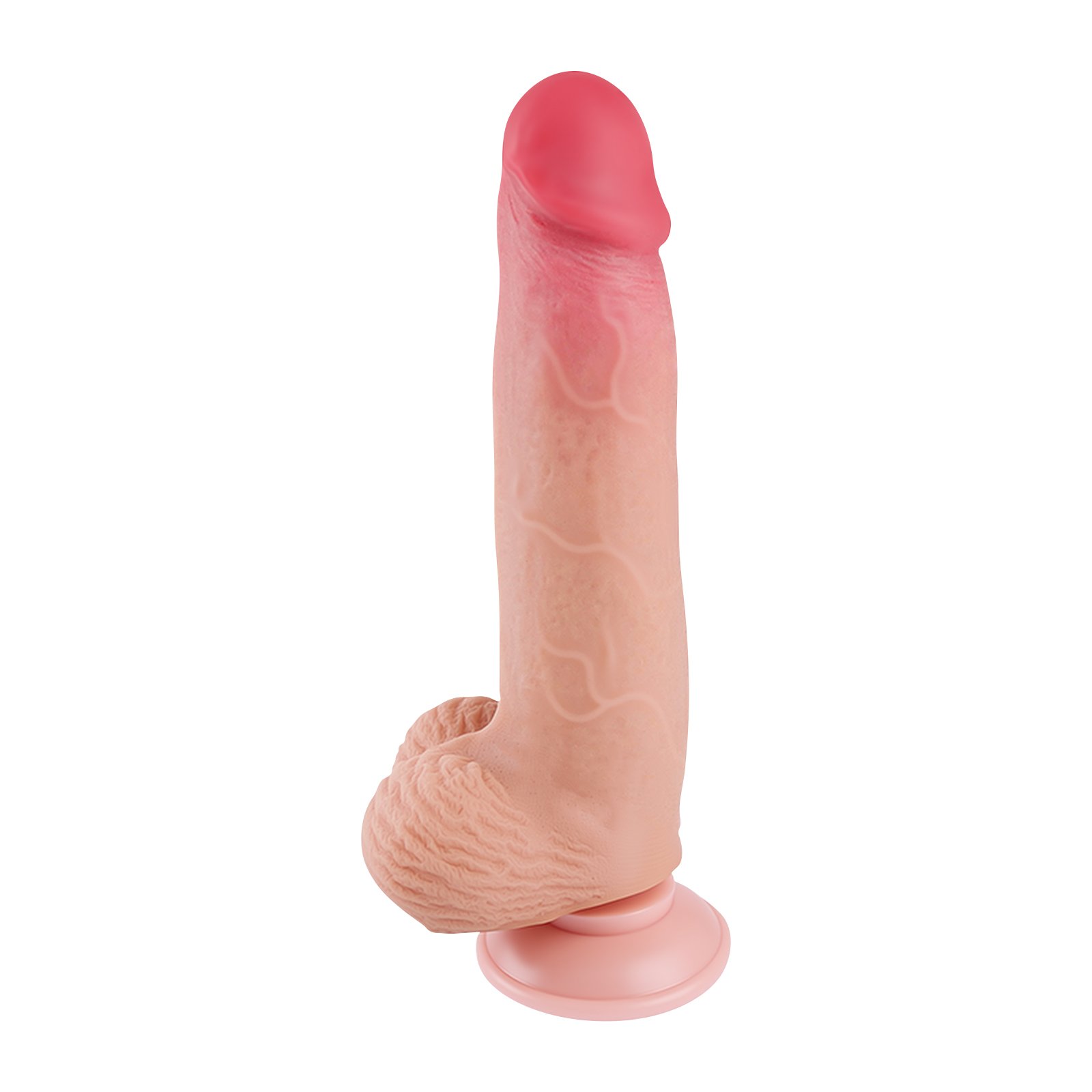
CLIMAGOHI Ultimate Poseable TPE Massager with Detachable Suction Base – Large Size ZY-SC11053
Original price was: $32.00.$28.90Current price is: $28.90.
[SULTRYCARE] Large Size Poseable TPE Body Massager – Lifelike Skin Feel – Detachable Suction Base – 6.3 in Insertable – Flexible Custom Shape ZY-SC11053

About author


Add comment