
No products in the cart.
Return To ShopWhat men really feel after being intimate with a partner
China OEM adult toy manufacturer
China custom sex toy manufacturer
China realistic dildo manufacturer
China adult toy supplier for brand
Throughout history, there has been a rather stereotypical impression in sexual culture that most people believe that in male-female sexual behavior, men are more likely to feel stimulation, pleasure and satisfaction than women, while women are often portrayed as submissive victims. So what is the actual situation?
A study from Queensland University of Technology in Australia has found that many men suffer from sexual behavioral depression after sex!
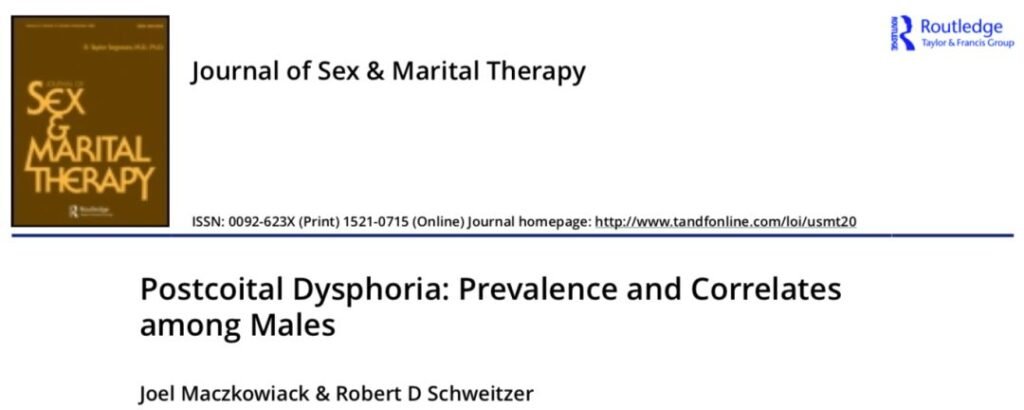
On July 24, 2018, the renowned journal of sex and marriage research, *Journal of Sex & Marital Therapy*, published online a research paper titled “Postcoital Dysphoria: Prevalence and Correlates among Male.” The paper, authored by two researchers from Queensland University of Technology in Australia, surveyed 1208 men and found that the majority of them had experienced depressive symptoms after sexual activity.
Four cycles of sexual behavior and emotions
In their study, the authors discovered that humans experience four main emotional stages before and after sexual intercourse. The first stage is pre-coital excitement, the second is the calm before intercourse begins, the third is orgasm during intercourse, and the fourth is the feeling after intercourse ends. However, to date, scientists have focused their research on the first three stages (excitement, calm, and orgasm), resulting in a lack of understanding of the emotions experienced after intercourse.
Previous research has generally assumed that both men and women experience a range of positive emotions during sexual intercourse, including satisfaction and relaxation immediately after consensual sex. However, there is evidence that a condition known as postcoital depression (PCD) can also occur after mutually satisfying sexual activity, characterized by unexplained crying, sadness, or irritability.
It is worth noting that “postcoital depression” (PCD) is a psychological phenomenon, which is different from a rare physiological condition experienced by men after intercourse called “post-orgasmic disorder syndrome,” which is considered to be an autoimmune response to male semen.
Symptoms of postcoital depression in women
Historical records document numerous experiences of women with polycystic ovary syndrome (PCOS), but to date, no research has confirmed the existence or prevalence of PCOS in men. Furthermore, studies on women’s post-coital experiences indicate that up to 46.2% of women experience postcoital depression (PCD) at some point in their lives.
Postcoital depression in men
Although there is no empirical research on postcoital depression (PCD) in the literature, some experts have pointed out that men may be more prone to PCD than women. In addition, symptoms of PCD in men have been reported on many social media platforms.
In fact, many pre-coital behaviors can affect postcoital depression (PCD). For example, it has been shown that couples who talk, kiss, and hug before sex experience higher satisfaction after sexual activity, which can reduce PCD symptoms in both men and women to some extent.
Investigation process and conclusions
In the article, the author recruited 1,635 men through social media and online psychological research websites to complete an online questionnaire. Of all the men surveyed, 414 were excluded because they withdrew from the study early.
These participants came from 78 countries , ranged in age from 18 to 81, and most had completed higher education and were identified as heterosexual.
When assessing the prevalence of postcoital depression (PCD) in men, 36.6% of participants had experienced PCD intermittently, while 4.4% of participants believed they experienced PCD regularly.
Overall, approximately 41% of men experience postcoital depression (PCD) at some point in their lives, and 20.2% of men have experienced PCD symptoms in the past four weeks.
In these questionnaires, many men with symptoms of postcoital depression (PCD) gave different descriptions of their feelings. Some described it as “I just want to be alone and don’t want to be touched by my partner,” while others felt “frustrated, annoyed, and restless, and even wanted to escape from reality .” In addition, some used words such as “emotionless” and “empty” to describe their feelings at the time.
These men stand in stark contrast to those who experience positive feelings after intercourse, as men who feel good after intercourse often use words like “feeling happy” or “satisfied” to describe their post-coital feelings.
Stereotypes in male-dominated culture often assume that every man is sexually insatiable and that they derive more pleasure from sex than women. However, the results of this study indicate that a significant proportion of men experience feelings of frustration, annoyance, and emptiness after sexual activity.
So, what were your feelings and experiences like?
share in github.com.
CLIMAGOHI Poseable TPE Body Massager – Lifelike Skin Feel ZY-SC11049
Original price was: $26.00.$19.80Current price is: $19.80.
[SULTRYCARE] Long Poseable TPE Body Massager – Lifelike Skin Feel – Detachable Suction Base – 6.5 in Insertable – Flexible Custom Shape ZY-SC11049

About author


Add comment