
No products in the cart.
Return To ShopWhy Foreplay and Afterplay Are the Real Essence of Intimacy

China OEM adult toy manufacturer
China custom sex toy manufacturer
China realistic dildo manufacturer
China adult toy supplier for brand
Hello everyone, I’m KY Media Department’s Number One Handsome Guy 47.
Not long ago, we saw the following message in our backend:
“My girlfriend and I seem to have a bit of a sex life that’s not going well. I’d like to have sex at least a few times a week, but she only does it once a week, and it even seems a bit strained (making me wonder if there’s something wrong with me?). However… she’s a pretty traditional girl, and I understand… But!! What should I do?? KY, please give me some advice!”
So… your sex life isn’t going well, right? Okay, I’ll be driving today’s ride. Before we officially begin, let me ask you a question:
Do you feel your sex life is harmonious?
A BBC report of 5,000 British adults revealed that only about one-third (34%) of adults are satisfied with their sex lives, and about one-fifth (19%) said they have felt stressed in their relationships because of disharmony in their sex lives.
You, the viewer, might be scratching your head: KY, what constitutes harmony, and what constitutes disharmony? From your academic perspective, what exactly constitutes “disharmony” in sex life?
Don’t worry, we’ll explain it one by one next.
Have you fallen victim to any of these “disharmonious behaviors”?
Sexual disharmony refers to a situation where both partners in a relationship have different attitudes toward their sex life and are dissatisfied with their experience.
In real life, it has both overt and covert manifestations:
Overt sexual disharmony
1. Inconsistent desires
2. Inconsistent frequencies
3. Inconsistency between sexual needs and expectations.
4. Inconsistent experiences, such as one partner experiencing pain during intercourse.
5. Inconsistent orgasms: One partner often struggles to reach orgasm and becomes frustrated by it.
Seeing this, you might think: We don’t seem to have this situation, so it must be harmonious!
Don’t get too excited yet. Suzannah (2017) points out that there are some less obvious signs in life that also indicate disharmony in sexual life.
Hidden sexual disharmony
1. It’s always initiated by one person.
2. Repeat step by step
3. There was almost no communication during the process.
4. It is difficult to establish emotional connections.
5. Feeling lost or even frustrated afterward.
If you experience any of these symptoms, it may indicate underlying disharmony in your sex life!
However, when disharmony occurs, it’s important not to arbitrarily attribute it to the partner’s “inability.” Behind disharmony in sexual life, there are often many psychological and social reasons.
What are some common causes of disharmony in sexual life?
Before discussing the reasons, we need to make one point clear: there is no such thing as “normal” sex life, whether in terms of frequency, experience, or any other aspect.
The reason for disharmony in sexual life is simply because of differences between the partners. So, what factors actually affect people’s libido and sexual behavior?
1. Sexual desire has different life cycles for men and women; disharmony may simply mean that they are not a perfect match.
The saying goes, “Women are like wolves at thirty and tigers at forty,” which is certainly an exaggeration, but sexual desire in both sexes is indeed closely related to age.
Marcia (2009) pointed out that males experience a surge in testosterone during adolescence, reaching a peak in libido, which then slowly declines throughout their lives, while females experience a slow increase in libido, peaking around age thirty.
So, if you’re close in age, it’s quite normal to have different sex drives!
2. Hormonal changes affect libido and sexual response.
Gabrielle Lichterman (2004) pointed out that during the period from day 24 of a woman’s menstrual cycle to day 14 of the next cycle, her testosterone levels gradually increase, and her libido increases accordingly. A week after ovulation, testosterone levels decrease, and libido also declines. However, men’s testosterone levels are usually high and stable.
Imagine a sexually aroused teenager encountering a woman whose testosterone levels are at a low point—how could they possibly achieve harmony?
Female sex hormones: Influenced by the menstrual cycle, they circulate in a circular pattern.
VS
Male sex hormones: high and stable
In addition to the impact of testosterone changes on libido, estrogen levels also affect the amount of cervical mucus secretion, which in turn affects the lubrication during sexual intercourse, and of course, the experience.
As I was writing this, my colleague snapped at me… It’s not like only heterosexuals have sex!
Don’t rush, after discussing the differences between men and women, the following factors may affect all relationships!
3. Stress affects arousal, making it difficult for people to engage in the process and resulting in a poor experience.
Studies have found that being under stress, fatigue, or environmental stress (such as prolonged exposure to high decibel levels and strong light sources) can affect sexual life (Yalom, 2012).
This is because stress causes a rise in cortisol levels, a hormone that can interfere with libido and sexual arousal. In a 2018 BBC report, 45% of respondents said that stress had negatively impacted their libido.
4. Anxiety about physical and sexual performance can also affect performance.
Sexual performance anxiety refers to worrying about one’s performance during sexual activity, such as…
“What if you can’t stand up?”
“What should I do if I look bad without makeup?”
What should I do if I make an unpleasant sound?
“What if it doesn’t last long enough?”
“What should I do if I can’t reach orgasm?”
These feelings and thoughts of anxiety can directly inhibit sexual arousal or affect people’s sexual performance (Ashley, 2020). Moreover, people may fall into the cognitive bias of “predicting the future,” believing that the next sexual encounter will also be just as unpleasant, leading to a vicious cycle in their sex life where “the more anxious they are, the worse the experience becomes.”
5. Of course, it may also be unable to escape the “hijacking” effect of societal norms that condemn sexual shame.
Sexual shame can stem from negative and disapproving attitudes toward sex in the external environment.
Growing up with sexually repressive and stigmatized education can make it difficult for us to confront normal sexual desires and fantasies, and to experience and enjoy sex. Gradually, shame can lead us to actively suppress our desires, and even cause more serious problems such as low libido and sexual dysfunction.
6. In addition, setbacks in actual practice are also a major reason for disharmony in sexual life.
Don’t worry, you don’t need to dim the screen here! We certainly won’t teach you specific techniques for sex, but rather explain which behaviors might affect your sexual experience. For example:
Too inexperienced and lacking in knowledge, for example, saying things like, “Ugh, where do I go in…?”
Being too fixated on something, or having excessive faith in one’s knowledge, such as, “The movie says this position is the best!”
Rushing things and disrupting the rhythm, for example, using phrases like “Hurry, hurry, hurry, charge, charge, charge!”
7. Finally, the harmony of your sex life largely depends on the quality of your relationship.
Both partners’ sexual pleasure and sexual satisfaction are related to their relationship status (Carpenter, 2009).
Couples with higher-quality intimate relationships → have greater trust and commitment to each other → feel driven by love, initiate sexual activity more proactively, and are more considerate and attentive to each other’s feelings during the process → leading to better sexual experiences and a positive cycle.
Couples with strained relationships → lack confidence, dependence, and security in each other → engage in sex passively or out of routine, without feeling cared for or connected during the process → develop doubts and disappointments in each other, further impacting the relationship and leading to increasing disharmony in their sex life.
Research confirms that factors related to relationships are more accurate predictors of sexual satisfaction (Velten & Margraf, 2017). In other words, factors that affect your relationship will also affect your sex life.
Therefore, when problems arise in a sex life, in addition to the reasons related to sex, the reasons related to relationships are also very worthy of our consideration.
Of course, after reading this, some people may feel that disharmony is not that serious, as long as the feelings are there!
Indeed, disharmony in sexual life is not a problem that necessarily needs to be solved. However, we still want to discuss it here because disharmony in sexual life can indeed have an impact on individuals and relationships.
Repeated rejections when a partner wants to initiate sexual activity can damage their self-esteem and even lead to functional disorders. Image | Provided by KnowYourself
The rejecting partner may feel discouraged because they haven’t met their partner’s expectations, or they may believe that their partner only wants to satisfy their physical needs and doesn’t respect them. Image | Provided by KnowYourself
Both parties might even suspect that the other’s lack of affection is the root of the disharmony. Image | Provided by KnowYourself
In either case, disharmony in sexual life can easily affect the relationship between two people and cause unnecessary misunderstandings between partners.
So, how can we improve disharmony and achieve a fulfilling sex life?
First, focus on your relationship and improve your sexual experience by enhancing the quality of your connection. Openly communicate with your partner about your feelings and identify any areas of repression, dissatisfaction with each other, or dissatisfaction with the relationship (including aspects of daily life and sex). Honest communication not only helps resolve issues but also effectively strengthens the connection between you.
At the same time, it’s important to express care and love to each other in daily life to enhance mutual trust and security. Only on the foundation of a good relationship can we discuss how to improve and enhance our sexual experience.
When it comes to disharmony in sexual life, many people might think of seeking medical help. Indeed, some serious sexual dysfunctions do require medical attention! However, some psychological factors can be gradually improved through trial and error.
It’s important to understand that “sexual happiness” and “well-being” are mutually reinforcing and closely related. Don’t easily dismiss a person because of disharmony in their sex life, nor should you ignore the potential harm and impact of disharmony in your sex life.
You need to have confidence in each other and give each other time. A harmonious sex life requires the joint effort of both partners. More importantly, regardless of what stage of your sexual experience you are in, you need to understand that there is no such thing as a 100% match in this world. The purpose of all your efforts is not to satisfy personal needs, but to promote the development of your relationship in a better direction.
share in github.com.
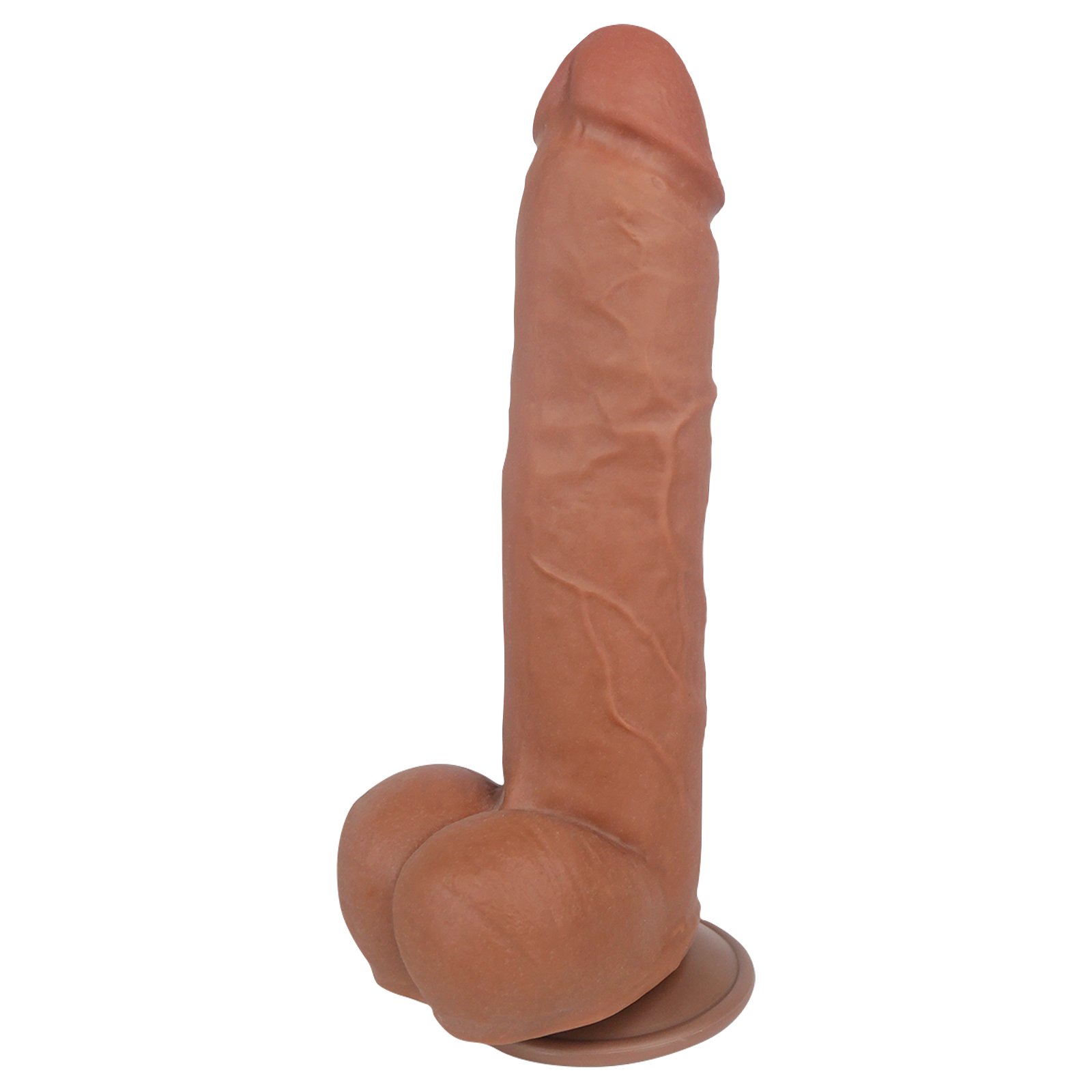
CLIMAGOHI Premium Realistic Flexible Dildos with Strong Suction Cup Base ZY-SC11022
Original price was: $76.00.$46.80Current price is: $46.80.
Material Excellence: Crafted from Ultra-Realistic TPE Skin, featuring a sturdy Metal Dragon Bone Skeleton (Metal Core) for shape retention and a powerful, reliable New Suction Cup Base.

About author


Add comment